We study quantum and classical dynamics in the condensed phase such as structural dynamics of liquids, charge and energy transfer in light-harvesting complexes, organic photovoltaic and luminescent materials, and biological systems. Our goal is to obtain a molecular-level understanding of the fundamental processes underlying the quantum dynamics that could, in turn, be used to harness molecular excitations in nanoscale environments. For example, a question we ask is what can we really learn about light-harvesting molecules from ultrafast nonlinear spectroscopies. Also, in order to capture important quantum effects in charge and energy transfer processes, we develop practical quantum dynamical methods for complex systems using a flexible, rigorous, and unifying path integral-based platform.
Research Areas
Theoretical Chemical PhysicsMolecular DynamicsStatistical MechanicsQuantum DynamicsCharge and Energy TransferUltrafast SpectroscopyNonequilibrium PhenomenonLiquid DynamicsEnergy Materials
Research Topics
1
Photoinduced Charge and Energy Transfer Dynamics in Condensed Phase
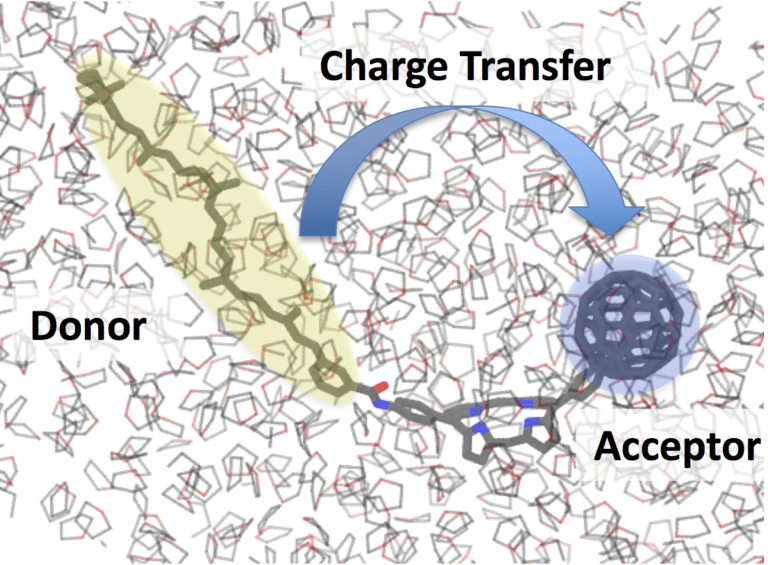
We study charge and excitation-energy transfer in organic photovoltaic and light-harvesting systems using electronic-transition theories, semiclassical dynamics, and mixed quantum-classical methods. These approaches reveal the interplay between electronic and nuclear motion at a molecular level.
Multi-Electronic-State Models for Complex Condensed Matter
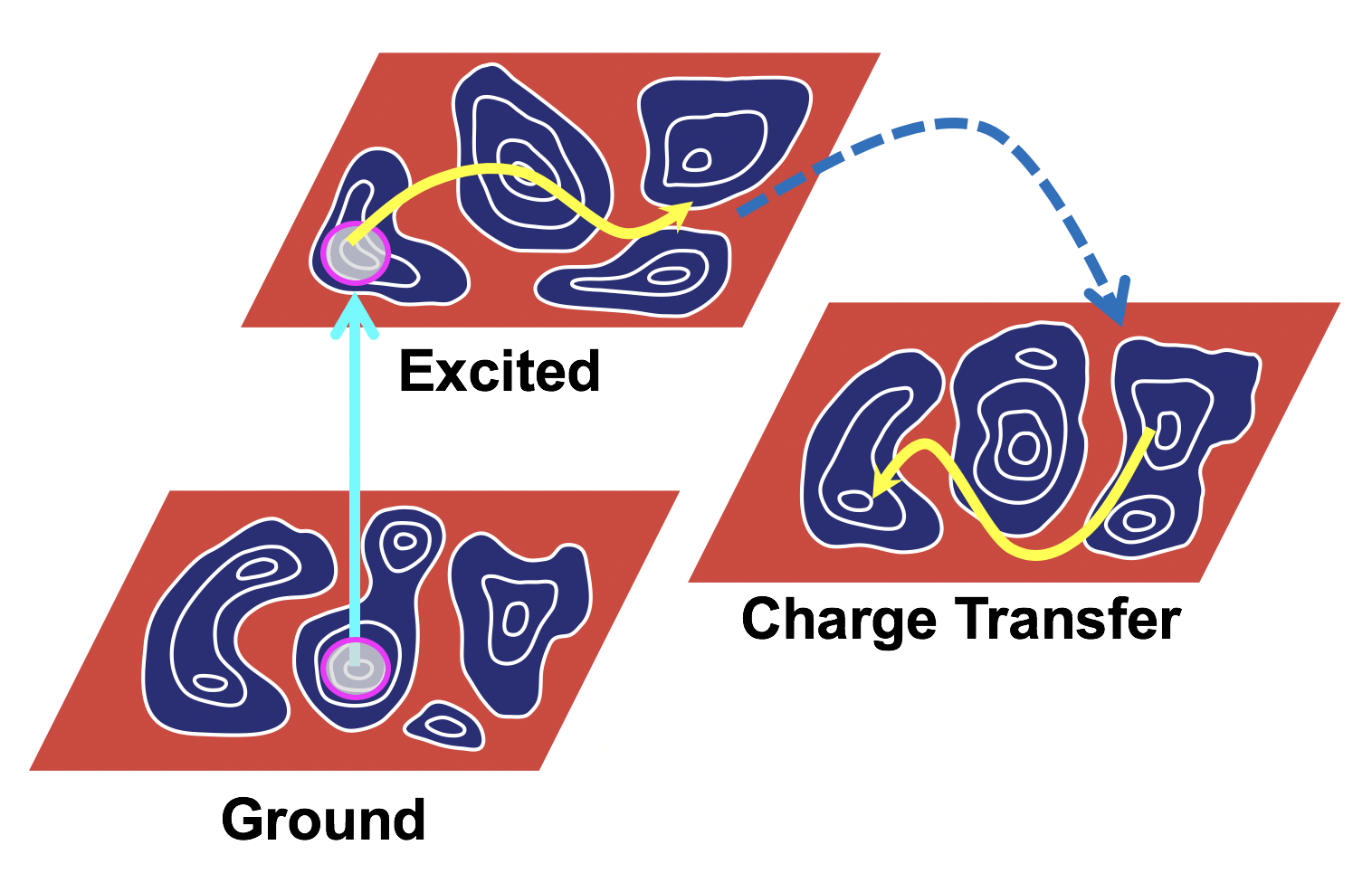
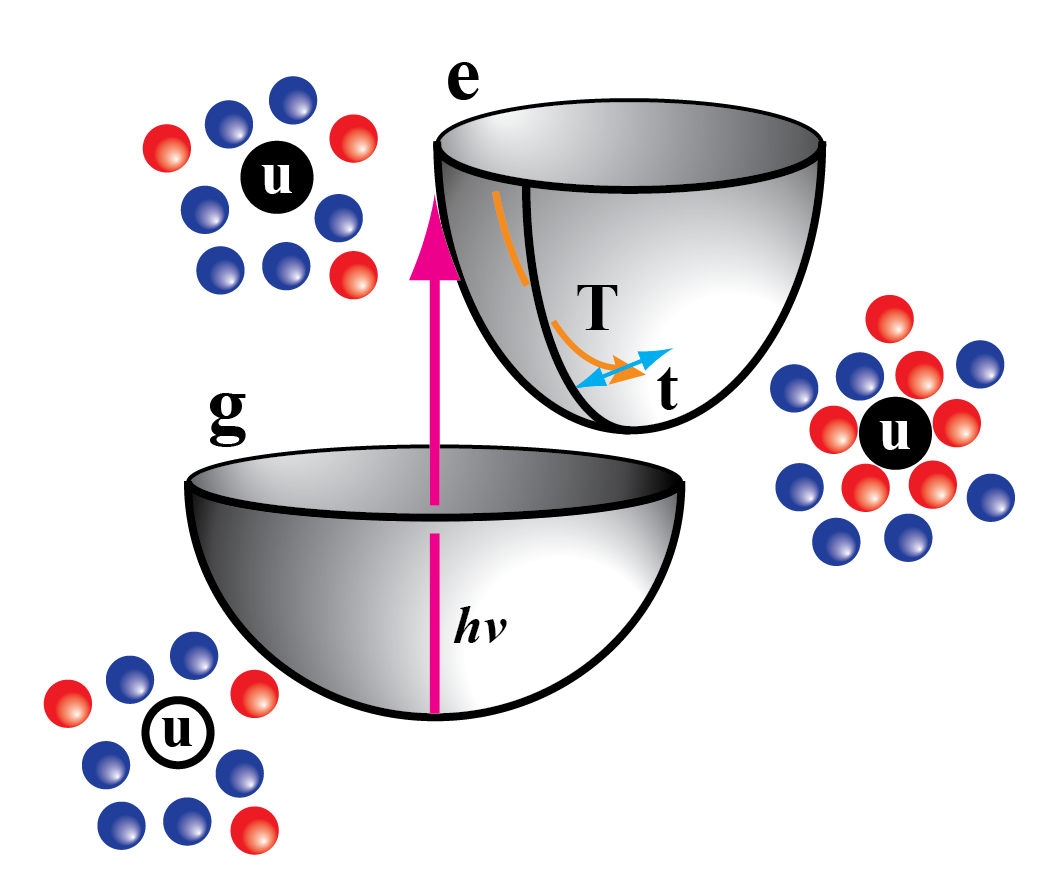
We develop effective Hamiltonians, including multistate harmonic and reaction-coordinate models, for charge and energy transfer in complex systems. Applications range from organic photovoltaic molecules with ground, excited, and charge-transfer states to multisite photosynthetic complexes.
We simulate linear and nonlinear spectroscopy of liquid solutions, including time-dependent fluorescence Stokes shifts, optical Kerr effects, two-dimensional Raman and Raman–THz spectroscopy, and solute-pump/solvent-probe signals using classical, semiclassical, mixed quantum-classical, and path-integral methods.
Path-Integral Methods for Charge Transfer and Spectroscopy
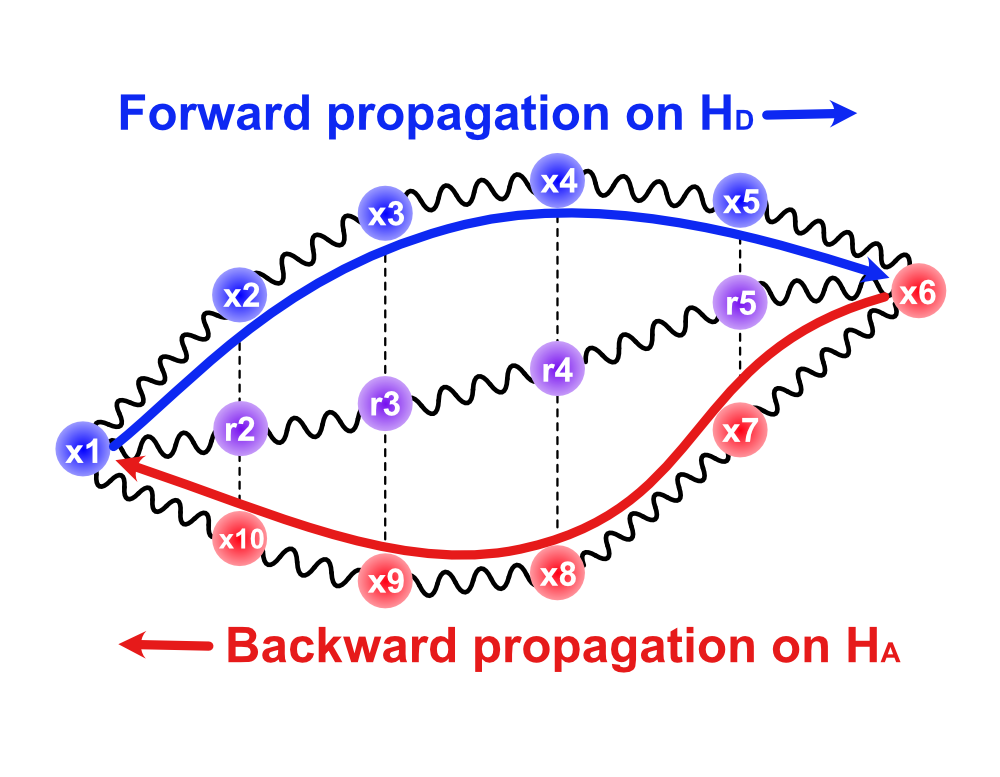
We develop open-chain path-integral techniques for quantum time-correlation functions and use them to calculate charge-transfer observables and spectroscopic response functions while retaining important nuclear quantum effects.
Zengkui Liu, Wen Xu, Mark E. Tuckerman, Xiang Sun*
J. Chem. Phys.157, 114111 (2022).
5
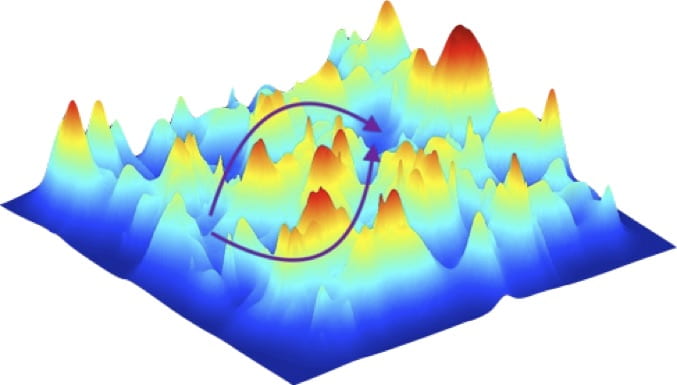
Machine Learning and Pathways for Nonadiabatic Dynamics
We disentangle nonadiabatic pathways in open quantum systems using numerically exact methods, mixed quantum-classical dynamics, and time-series machine learning. Our work examines how much physical structure a model needs to forecast long-time quantum dynamics reliably.
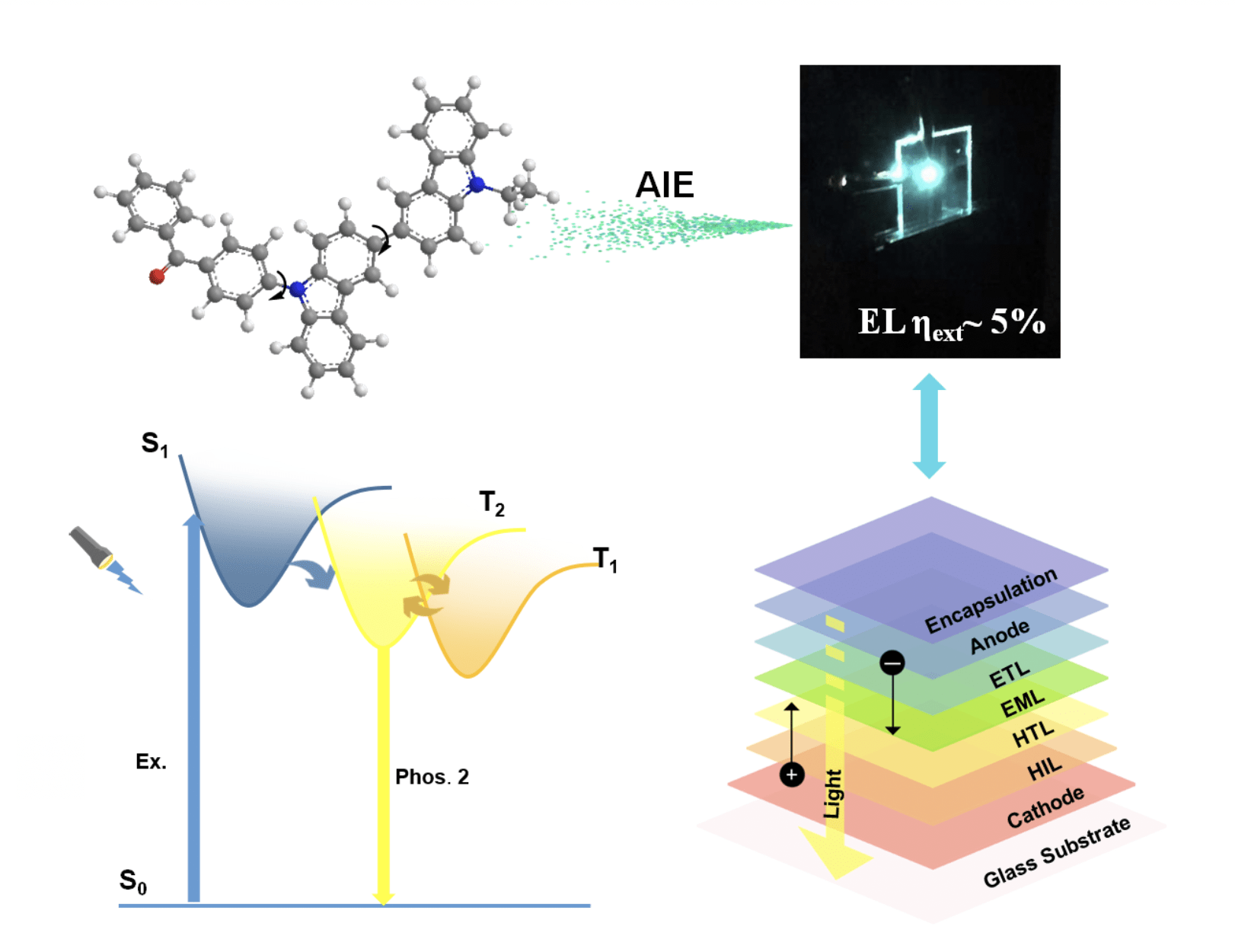
Aggregation-Induced Emission and Room-Temperature Phosphorescence
We use quantum chemical calculations to investigate singlet and triplet excited states, radiative and nonradiative decay, singlet fission, aggregation-induced emission, and room-temperature phosphorescence in organic molecules and light-emitting materials.